คำค้นยอดฮิต: ข้าวเหนียวมะม่วง ของขวัญออแกนิค ผลไม้สด
TH | EN
฿ 0.00
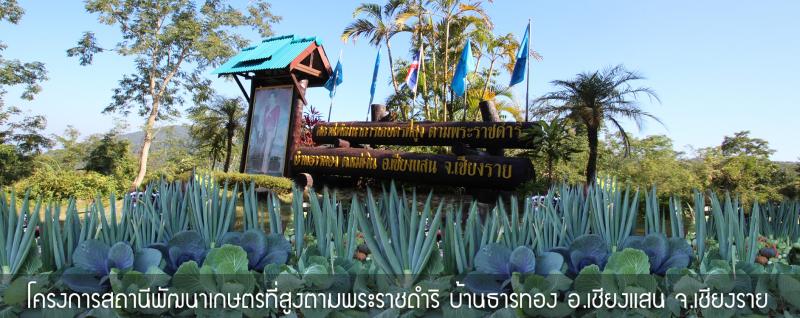
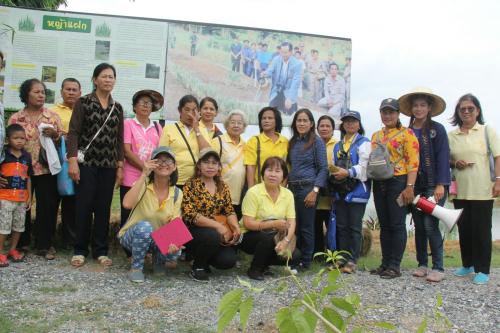
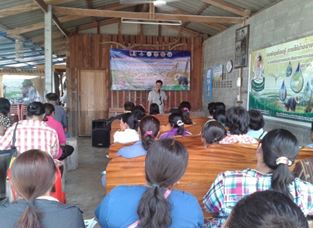
Agricultural Development Station at Ban Than Thong Royal Initiative
Sub district Mae Ngoen District Chiang Saen Province Chiang Rai
Image
Weather
Closed
Business hours
• Sunday
: 09:00 - 16:00
• Monday
: 09:00 - 16:00
• Tuesday
: 09:00 - 16:00
• Wednesday
: 09:00 - 16:00
• Thursday
: 09:00 - 16:00
• Friday
: 09:00 - 16:00
• Saturday
: 09:00 - 16:00
Note
: -
Review Score
0
Availability
0
Value
0
Service
0
Read more >
Information
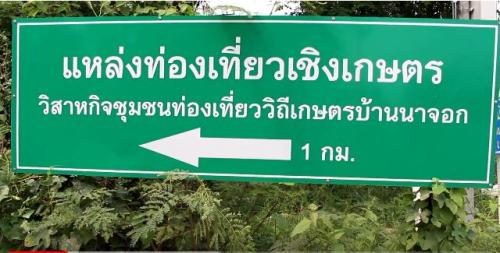
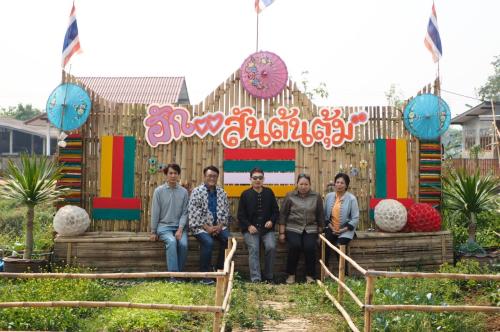
It is an eco-tourism attraction with non-toxic vegetables, flowering plants
Source
Thailand Tourism Directory
Recommended
Entrance fees
• Entrance fees: Non-fee
• Remark : -
Review (0)
0
จาก 5.0
Availability
Value
Service
Relate Agritourism
Suphanburi Banana Conservation Center: It is a sufficiency agricultural community enterprise, responsible for the conservation of rare banana species in Thailand; and it has collected up to 108 banana species, especially the species of Suphan Buri itself.
Suphan Buri
Agricultural Technology Promotion Center for Economic Insects Chiang Mai Province Established in 1980 It is an agency under the Department of Agricultural Extension. Ministry of Agriculture and Cooperatives It plays a major role in research studies. Test and apply economic insect farming technology Promote and transfer economic insect culture technology as a center for development, production, expansion and distribution of economic insect species, as well as providing basic product quality inspection services and diagnosis of diseases and pests of economic insects to farmers and interested parties. It is also a tourist attraction. Agribusiness that is open to both Thai and foreign tourists to get to know and learn about the life of bees and important economic insects of Thailand. Each year, both Thai and foreign tourists visit to study work and travel to the learning points that the center has exhibited, such as learning points on beekeeping, bee breeding, burrow bee, cricket, lac, queen bee, and product processing. and also provide “Honey Shop” product display and distribution point where tourists can watch, taste and buy real, good quality honey and other processed products. of community enterprises and entrepreneurs Tourism program : Learning point/base interesting activities 1. Breeding bees. Open house for breeding bees. (Acquaintance with bees, life cycle and well-being of bees in the hive) Keeping and maintaining bee health checks collecting nectar from flowers and sap. Preliminary analysis of honey quality. 2.Honey bees Wild bees make money. (Get to know the burrowing bees and natural nest building. Traditional poaching beekeeping techniques Modern honey beekeeping Protecting against the pests of honey bees Techniques for collecting good quality honey 3. Chan Rong Open House Chan Rong (Get to know the amazing mini bee, the best pollinator). propagation Nectar, pollen and resin collection behavior of saplings Making resin extracts and their uses 4. Crickets Crickets are the world's reserve protein food source. Commercial cricket species Standard farming techniques and management Processing crickets as food Learning point/base interesting activities 5. Shellac: Get to know lac insects/life cycle and benefits. Transplanting plants for lac culture farming techniques Care and harvest Technology for protection and nursery of lac species during the dry season 6. The queen bee opens the experience of finding the queen bee queen in the hive. birth of queen bee The Great Duties of the Queen Bee Techniques for cultivating queen bees 7. Processed products Watch/Taste/Touch A variety of bee products, natural gifts. The benefits of bee products Tips for buying honey Processing bee products into products for daily use Route links with other attractions: - Chiang Mai Night Safari Night Zoo, distance 750 m. - Royal Park Ratchaphruek, a distance of 1 km. - Wat Inthrawat (Wat Ton Kwen), a distance of 2.5 km. - Wat Phra That Doi Kham, a distance of 4.4 km. - Baan Tawai Handicraft Center, a distance of 10 km. - Wiang Kum Kam, a distance of 11 km.
Chiang Mai
The villagers of Ban Na Ton Chan have a traditional way of life mixed farming. There is mud fermented cloth which made into a good weight fabric. It is beautiful with mud fermentation and intricate weaving. Villagers have adjusted the area for camping. Raise the bamboo litter to make a seat for eating, make a toilet, the rest is still in the same condition as before. This mountain ridge has beautiful scenery. Visitors can watch the sunrise and sunset at the same point. There are about 23 homestays in Ban Na Ton Chan, living separately or in the same house as the owner of the house. Visitors can indulge in the nature around the accommodation with a fully equipped kitchen, they can buy food, cook, and eat comfortably. There are cycling activities to see the way of life in the village. See orchards and fields with a community guide and visit the fruit orchards of the villagers are some activities. Tourism program : - Stay at Baan Na Ton Chan homestay which currently has a total of 23 houses. - Biking to see the way of life in the village, visiting fruit orchards and fields. - Watch how to make mud fermented cloth, weaving by hand, Yok Dok cloth, and buying ready-made mud fermented fabrics. - See how to make a barn doll (Ban Ta Wong) - See stump handicrafts - See and taste seasonal fruits such as durian, rambutan, longkong, mango, maprang, mafai, longan. - View point "Huai Ton Hai" to watch the sea of ​​mist and the sun - Watch and test how to cook rice and local food, and sip coffee in a bamboo tube. Route links with other attractions: - Si Satchanalai Historical Park Si Satchanalai District, 30 kilometers - Antique gold shop, antique silver shop 30 kilometers - Namtok Pa Kha National Park 70 kilometers - Sukhothai Historical Park (Old Town Sukhothai) 77 kilometers - Ramkhamhaeng National Park 110 km.
Sukhothai
Kud Kaloeb is a large natural water source with clear water to see the fish; it is located in Tambon Nong Ped and Tambon Nong Hin. Originally, it was just a water source that people used for farming and only catch fish for a living. But, now, Yasothon has developed it into a tourist attraction and recreation venue by adjusting the landscape to be beautiful. It is where the Songkran Festival of the province is held every year. There are people who always come to visit and relax on holidays. The convenient travelling to Kud Kaloeb is, starting from Yasothon - Amnat Charoen Road at km 14 (Ban Khamkerd, notice that there will be watermelons for sale along the road), turn left into Ban Nong Ngong, go to Ban Nong Bok - Ban Non Sawat, you will reach Kut Kalieb. The distance is about 10 kilometers.
Yasothon
It is organized as a learning point station in a systematic way such as 1.1. Orchid seed service station and an orchid seed room 1.2. Planting station for various orchid species and increasing the value of orchids 1.3. Ornamental plant planting and propagation station 1.4. Biological production (Trichoderma Beauveria BT), composting does not return to the pile of Mae Jo formula. 1.5. Earthworm, cricket and sloping station 1.6. Hydroponics and Sky Vegetable Planting Station 1.7. Various types of mushroom cultivation stations 1.8. Plant seedling cultivation station and food processing from mushrooms 1.9. Different types of fruit plant propagation stations 1.10. Integrated Agricultural Station according to the Sufficiency Economy Philosophy (can be adjusted as appropriate)
Samut Sakhon
Little House in the Big Wood is a learning center of sufficiency economy philosophy. It was established by the new generation of agriculturists who would like to inherit sufficient agriculture. By applying a house and garden as the learning center for visitors.
Chumphon
King Bhumibol Adulyadej (King Rama IX) foresaw the significance of plant genetic conservation prior to a recognition of the terms “Biological Diversity” and “Conservation” in Thailand. During the trip to Klai Kang Won Palace, A. Hua Hin, Prachuap Khiri Khan Province in 1960, he passed through A. Tha Yang, Phetchaburi Province and noticed many Yang Na trees (Dipterocarpus alatus). Therefore, he had royal words to collect the seeds to plant at Phra Tamnak Piam Suk, Klai Kang Won Palace, and grow the seedlings at Royal Chitralada Projects to study. In 1985, King Rama IX gave a royal word to conserve jackfruit tress around the Grand Palace and initiated the plant conservation project in the palaces by tissue culture. Later in 1986, he had the royal idea to conserve and breed rattan palms and arrange the herbal garden in Royal Chitralada Projects area. Her Royal Highness Princess Maha Chari Sirindhorn carried on the plant conservation project by having the royal idea and asked Lord Chamberlain to carry out plant conservation project in June 1992, when the seed gene bank was formed, and study the preservation of non-industrial crops under the royal thought framework. In 1993, Mr. Sujin Phunikom, the Assistant Subdistrict Headman of Salui and Tha Sae District, Chumporn Province, and his group, cooperated with the Director of Ultra Products Co., Ltd. and the agriculturists in Chumporn Province to establish plant conservation project at the public area located at Moo.6, Salui District (presently Moo. 5 and 6, Salui District, and Moo.4 and 7, Song Phi Nong District). At the same time, the Royal Chitralada Projects was looking for the area to set up the Plant Genetic Conservation Project Under The Royal Initiative of Her Royal Highness Princess Maha Chari Sirindhorn. Subsequently, Royal Chitralada Projects represented by Professor Prachid Wamanont (the Consultant) and the team met with Chumporn Governor (Mr. Prayoon Promphan) to discuss about the project. The first five years, the project was named “Plant Conservation and Development Project Under The Royal Initiative of Her Royal Highness Princess Maha Chari Sirindhorn, Chumporn Province”. Chumporn Provincial Agricultural Extension proposed the project for the approval from Chumporn Governor and submit the project documents to the Director of Royal Chitralada Projects to respectfully inform to Her Royal Highness Princess Maha Chari Sirindhorn on 26 April 1993. Moreover, Plant Conservation and Development Project was integrated with the royal plant genetic conservation project, which Dr. Pisit Wora-urai was a Chairman. The executives meeting on 9 July 1997 had the resolution to change the project’s name from “Plant Conservation and Development Project Under The Royal Initiative of Her Royal Highness Princess Maha Chari Sirindhorn, Chumporn Province” to “Plant Genetic Conservation Project Under The Royal Initiative of Her Royal Highness Princess Maha Chari Sirindhorn”
Chumphon
Phu Tham Phra is a large cave, about 3 wa wide, about 8 wa long, located on the southern slope of the mountain. There is an entrance along the rock niche which is majestically located around a tunnel; from the mouth of the cave to the north can walk comfortably. Tham Phra Buddha Cave has 2 levels of nature as a place to be enshrined of Buddha statues, which are lined up in rows and there are 2 reclining Buddha images, Phra Kajjana Buddha images, built during the reign of Ajarn Dee Chano in this beautiful cave Phu Tham Phra is a small mountainous area. The area is about 200 rai, with mixed deciduous forests that are generally quite complete, providing shady, cool weather. It is the watershed source of many creeks. The stone pillar looks like a tourist attraction of Phu Pha Thoep. And there is a viewpoint as a beautiful natural source near the ascent, there will be a brick arch to be "Phu Ngo", the locals call Khong Gate which is located in the north of Phu Tham Phra, about 1 kilometer away. Currently, only ruins remain. The sanctity of Phu Tham Phra that has been passed down from generation to generation is that if villagers in that area go out to find forest products; they must come to this cave to worship. Then there will be luck in making a living and escape from all dangers.
Yasothon
Experience the local wisdom of the people in the community, and learn about Sufficiency Economy Philosophy.
Ubon Ratchathani
There is various fruit trees plant on this farm such as Mangosteen, Longkong, durian, Rambutan, Santol, and Mayongchid. It is like a normal orchard but the difference is that "Suan Prasomsap" uses natural extracts. and use bio-fertilizer in pest control to grow fruit trees ensuring that quality products will be safe from toxins and chemicals. That's fruits from this orchard have a sweeter and tastier flavor.
Rayong
high altitude research and training station used as a plot to study and experiment on plants It is a place for internships for students both inside and outside the institute and as a place to study nature. to people who are interested in general
Chiang Mai
In the past, the Phu Ruea High Altitude Agricultural Experiment Station was to test the winter fruit varieties for planting in the northeastern highlands, including apple cultivars. and peach varieties for eating fresh In addition, Phu Ruea High Land Agricultural Experiment Station has also made efforts to collect and study grape varieties for making wine, including grapes for eating fresh, to develop varieties and encourage farmers in Loei Province to continue planting.
Loei