คำค้นยอดฮิต: ข้าวเหนียวมะม่วง ของขวัญออแกนิค ผลไม้สด
TH | EN
฿ 0.00
Smile Lemon Learning Center for Integrated Agriculture
Sub district Bang Talat District Khlong Khuean Province Chachoengsao
Image
Image
Image
Image
Weather
Closed
Business hours
• Sunday
: 09:00 - 16:00
• Monday
: 09:00 - 16:00
• Tuesday
: 09:00 - 16:00
• Wednesday
: 09:00 - 16:00
• Thursday
: 09:00 - 16:00
• Friday
: 09:00 - 16:00
• Saturday
: 09:00 - 16:00
Note
: -
Review Score
0
Availability
0
Value
0
Service
0
Read more >
Information
Integrated Agriculture Learning Center
Source
Thailand Tourism Directory
Recommended
Entrance fees
• Entrance fees: Non-fee
• Remark : -
Review (0)
0
จาก 5.0
Availability
Value
Service
Relate Agritourism
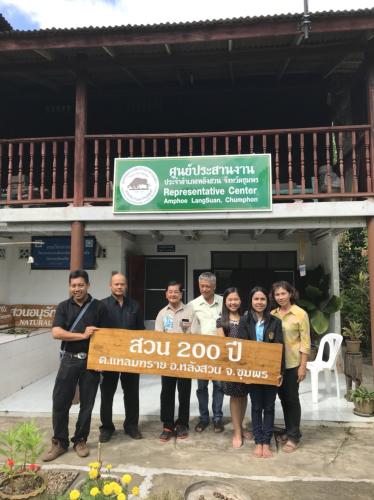
The ancient 200-year-old garden utilizes the resources for the long-term highest benefits. It is located at No. 5 Moo 11, Laem Sai Sub-district, Lang Suan District, Chumphon Province, about 2 kilometers from Lung Suan Market. Samroeng Rajavate, the fourth generation of the family, is a current caretaker. This is the mixed garden, where various fruits are grown in the same area. Whether Local Durian, Mangosteen, Local Rambutan, Langsat, Betel Nut, Coconut, Nutmeg, Sato, Lukniang, Sapodilla, Champa, Jackfruit, Mafai, Banana, Homegrown Vegetables, and Herbs. Without the use of chemical fertilizers to accelerate growth. The soil is treated by growing the grass to nourish the soil moisture throughout the year. Natural fertilizer is used, such as dead leaves and annual crop residues. For pest control, birds, squirrels, and tree shrews are eating worms and insects as food. The cost includes the labor cost during harvesting season to cut grass to facilitate the harvest and at the area to plant the trees that will be repaired.
Chumphon
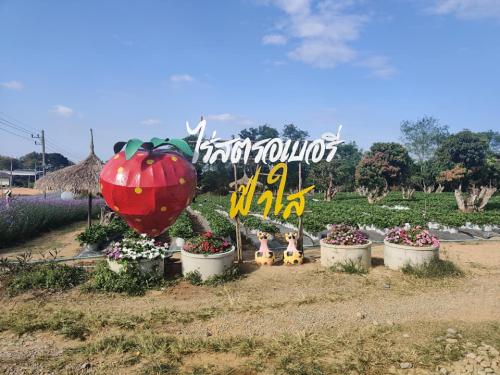
There is a photogenic Violet in front of the farm and it is available to pick fresh strawberries from the trees here.
Nakhon Ratchasima
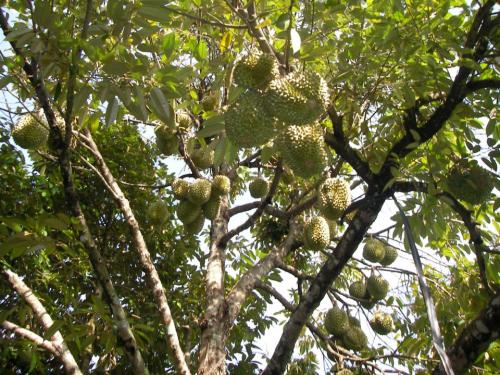
Visiting the garden and eating fruits such as durian, rambutan, mangosteen, and longkong. - Ecotourism activities at the Huai Kha Khaeng buffer zone - Nature Trail Tourism Program: 1. Watching the integrated agro tourism, such as an orchard of guava, Wong Bo lime and fresh mulberry. 2. Visiting the orchard and eat quality fruits such as durian, rambutan, mangosteen, and longkong. 3. Ecotourism at the Huai Kha Khaeng buffer zone 4. Seting up a tent to relax at Huai Nam Ring Reservoir in the area of Huai Kha Khaeng buffer area The direction that links with other attractions: - Paying homage to Luang Por Sema at Wat Pa Sak, which is a local monk of Lan Sak District, a distance of 5 kilometers. - Visiting Huai Kha Khaeng National Park, a distance of 12 kilometers. - Hup Pa Tat, a distance of 10 kilometers. - Samo Thong Hot Spring, a distance of 12 kilometers.
Uthai Thani
Suphanburi Banana Conservation Center: It is a sufficiency agricultural community enterprise, responsible for the conservation of rare banana species in Thailand; and it has collected up to 108 banana species, especially the species of Suphan Buri itself.
Suphan Buri
It is an area that connects to Khao Yai National Park; thus, this area has an abundance of nature. And, the villagers here make seasonal orchards, and it is suitable for natural tourism .There is also a tree dug around, selling various seedlings and a camping ground
Saraburi
Supattra Land Garden is a collection of 25 types of tropical fruit trees such as durian, mangosteen, rambutan, grape, jackfruit, longan, star fruit, coconut, longkong, salaam, dragon fruit, and rose apple. There are many fruits and also hydroponic vegetables and beekeeping.
Rayong
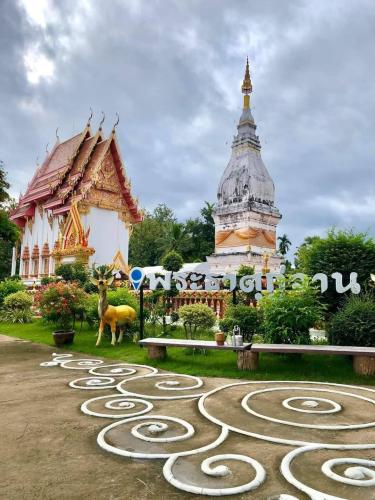
Phra That Kuchan Located within the Ban Ku Chan Temple is an important sanctuary. People of Yasothon and nearby provinces pay their respects. The appearance is a square lotus-shaped chedi, shaped like Phra That Phanom, but smaller. The part of the lower base in the shape of an inverted lotus is a low facing lotus. Supporting a flat rectangular high base connected with a square lotus shape decorated with exquisite and beautiful patterns in ancient times. and the top of the relic in a square shape, which supports the tiered top From the evidence, it should be built according to the general motto of building relics, namely, to contain the Buddha's relics. Each year, a water bathing ceremony is held to preserve the good traditions. Architectural features: Phra That Ku Chan, width 5.10 meters, height 15 meters. Location is located at Ban Ngew. In the middle of the courtyard of Wat Ku Chan, Ku Chan Subdistrict, Kham Khuean Kaeo District, Yasothon Province which looks similar to Phra That Phanom. The only difference is the size that Phra That Ku Jan is smaller. Significance to the community: It is a place of worship for the people of Yasothon and nearby provinces. Every year, the people of Ku Chan sub-district will bring water, perfumes to bathe the relics in the morning of the full moon of the 6th month. In the afternoon, they go to bathe the water ceremony. Ku" after that, they will take them to Nong Sa Phang to bring water from Nong Sa Phang to perform the ceremony Pouring water on relics and bai sema which this ritual must be done annually There is a belief that if the ceremony is not performed, it will cause rain out of season; the villagers of Gu Zhan therefore practice this ritual regularly.
Yasothon
Nam Dun Thray Dud Miracle pond Nam Pud upstream forest Black flowers Nam Lod Cave Battlefield historical Cave Tarn Prueksa Waterfall or Bang Khuy Waterfall
Surat Thani
The agricultural tourism is run by the community. There are several activities which are riding tractor to the pier, rowing a boat, seeing the pomelo orchard, learning about planting, tasting the pomelo, eating the local food, watching the shows ,and homestay. Travel Programs 1. 1 day costs 350 baht per person: welcoming tourists, riding a tractor, riding a boat, enjoying the nature, visiting pomelo orchard, having meals, buying orchard products, sending tourists back 2. 2 days 1 night costs 990 baht per person: The first day: welcoming tourists, guiding to the agricultural tourism learning center, having dinner at visitor reception center, attending the Bai Sri Su Kwan ceremony, watching the shows of local children, joining activities, and staying at homestay The second day: having breakfast at visitor reception center, buying souvenirs, and sending tourists back Other near attractions 1. Hat Nam Phrom - 5 kilometers far 2. Kaeng Tad Sai - 9 kilometers far
Chaiyaphum
1. Form of activity: see and study the production process of jasmine rice, volcanic soil, weave mat demonstrate, fabric dyeing from soil at Ba Rai holy well. Sightseeing plant herb production area and herbal processing, buy some souvenir or product and agricultural goods, OTOP center. You can try yummy food in KhanToke style and see Apsara Dance, see view by bicycle, take a rest at homestay, visit rural market in the morning. 2. The way of community: cultivation, southern east livelihood, traces of Khmer civilization. 3. The Participation of tourist: tour, taste, shopping, snap, share, do and learn agricultural station. Tourism Program 2 days 1 night Frst day, Check in at the accommodation, rent some bicycle, see how to produce volcanic jasmine rice station, see how to plant vegetable and herbal processing, having lunch at Baray reservoir. Afterwards, visiting at Mueang Tum Ruin, see around the community by bicycle in the evening then make some traditional dinner at homestay (KhanToke style and see Apsara dance but it is depend on coustomer's demand because it is an extra charge), lie down at homestay. Day 2 Visit morning rural market, give food to the monks, have a meal at homestay, weave mat demonstrate and fabric dyeing from soil at Ba Rai holy well, weave fabric as Paco Fern pattern (Pak Krood) and buy some silk fabric with Pak Krood pattern at The OTOP center, go up the hill to visit Khao Phanom Rung National Park The route that linking with the others tourist attraction 1. Mueang Tum Ruin distance 500 meters. 2. PhanomRung Historical Park distance 5 kilometers. 3. Phu Akkanee Dye Fabric group distance 23 kilometers. 4. Wat Khao Ang-Karn Chaloem Phra Kiat district distance 25 kilometers
Buri Ram
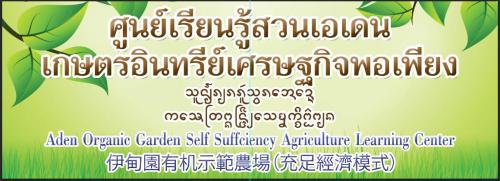
1. It is a learning center for the Garden of Eden, organic agriculture, sufficiency economy. 2. Making biogas for household use 3. Making organic fertilizer and making bio-fermented water 4. Using water buffalo to plow into a traditional way of life 5. Damping and restoring forests for water sources (forest planting) 6. Making pork pits, buffalo pits, chickens, etc. 7. Growing organic vegetables and organic fruits (mixture) 8. Fisheries
Chiang Rai