คำค้นยอดฮิต: ข้าวเหนียวมะม่วง ของขวัญออแกนิค ผลไม้สด
TH | EN
฿ 0.00
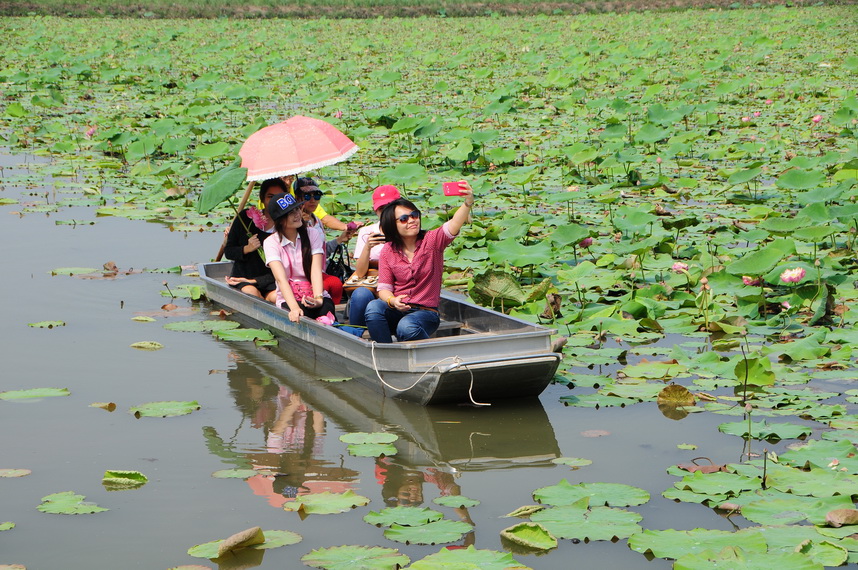
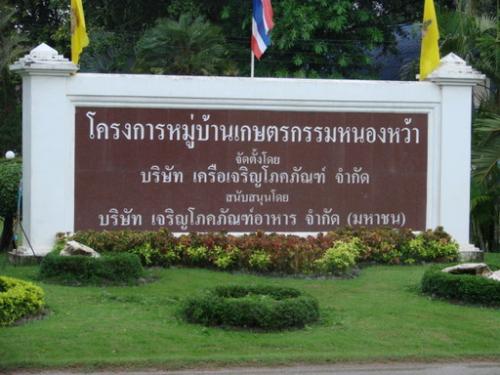
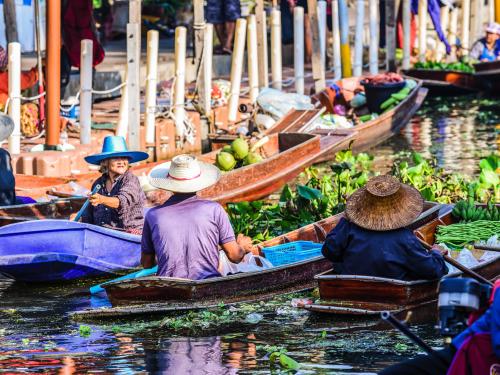
Community enterprise, agricultural tourism, cruising along the Maha Sawat Canal
Sub district Mahasawat District Phutthamonthon Province Nakhon Pathom 73170
Image
Image
Image
Image
Weather
Closed
Business hours
• Sunday
: 09:00 - 16:00
• Monday
: 09:00 - 16:00
• Tuesday
: 09:00 - 16:00
• Wednesday
: 09:00 - 16:00
• Thursday
: 09:00 - 16:00
• Friday
: 09:00 - 16:00
• Saturday
: 09:00 - 16:00
Note
: -
Review Score
0
Availability
0
Value
0
Service
0
Read more >
Information
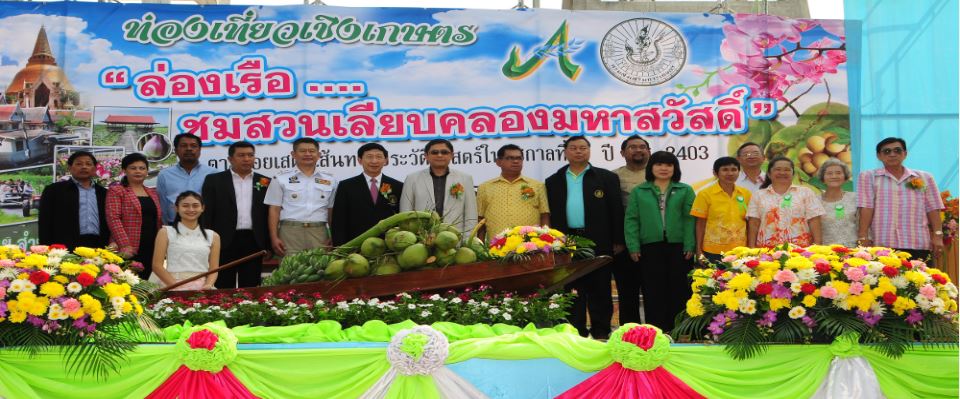
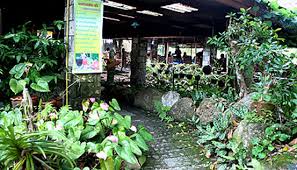
The perfect combination between a Historic River and Agro-Tourism, ""Cruising along the Maha Sawat canal and the beautiful orchard sceneries."" Changing the natural capital to be a perfect agricultural tourism.

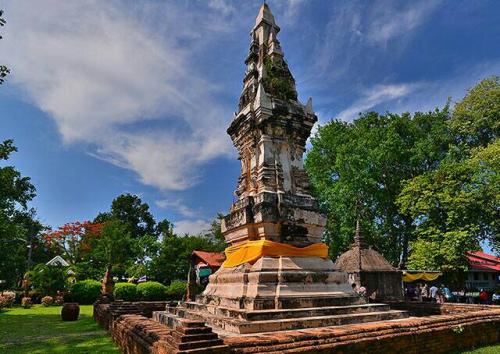
The agro tourism ""Cruising along the Maha Sawat canal and the beautiful sceneries"" was initiated from the concept of bringing the way of life of farmers who are doing routine of working together with the existing ""natural capital"", the resources of agriculture, gardening, farming, plowing, which parents, grandparents, and grandparents carry on until this generation. To adapt with what is available in the area, Khlong Khut Maha Sawat, historic canal that King Mongkut (Rama IV) graciously digs for a route for His Majesty to worship Phra Pathom Chedi. It took 5 years to complete the excavation, from 1855 to 1860. Khlong Khut Maha Sawat is 27 kilometers long from Bangkok to Tha Chin River and has many stories about the canal, such as the King's request to build 7 pavilions along the canal, for example the City Hall (Sala Klang Subdistrict Nonthaburi Province), Sala Thammasop (Taweewattana District, Bangkok), Salaya and Sala Din, which are in Phutthamonthon District. In addition, there are people using the last name beginning and ending with the word ""Sawat"" about 68 surnames such as Sawat Daeng, Sawatjun, Sawatsoradet, Sawatnam, Sawatdee Me, Desawad, etc.

tourism program
One Day Trip
Point 1 going to the pier at Suwannaram Temple with welcome farmers to lead tourists to various spots
Point 2 Watching the Gac Processing and the story before it came to be Yentafo Fak Rice and healthy gac juice
Point 3 Visiting Na Bua Luang Cut Dok to learn how to make lotus Rowing a boat to collect lotus in the middle of the swamp Learn to fold lotus petals.
Point 4 Visiting the miracle of Thai rice.
Point 5 Orchid Garden Visit an orchid garden and cultivate various orchid species.
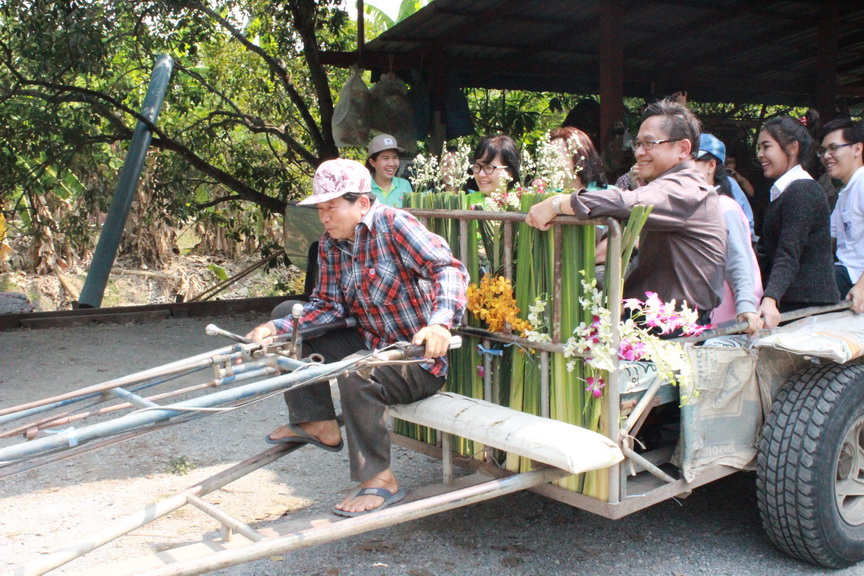
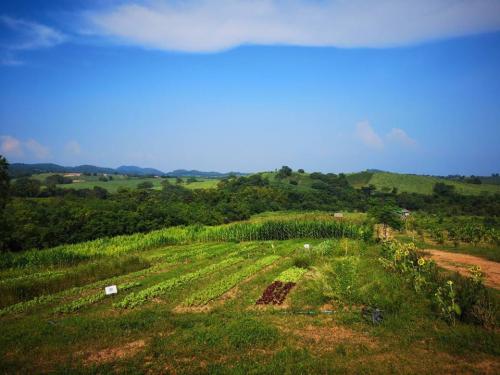
Point 6 Visiting the fruit orchards, mixed farming fields, and tasting seasonal fruits. Taking an E-Tak car ride to see the garden and plots of rice fields

Route links with other attractions (with distance/km)
Jesada Technik Museum Nakhon Chai Si District, 21 kilometers distance
- Thana Market, Nakhon Chai Si District, 25 kilometers distance
- Don Wai Floating Market, Sampran District, 10 kilometers distance
- Wat Rai Khing, Sampran District, 15 kilometers distance
- Lam Phaya Floating Market, Bang Len District, 26 kilometers distance
- Phutthamonthon Sathan, Phutthamonthon District, 6 kilometers distance
- Phra Pathom Chedi Mueang Nakhon Pathom District, 36 kilometers distance

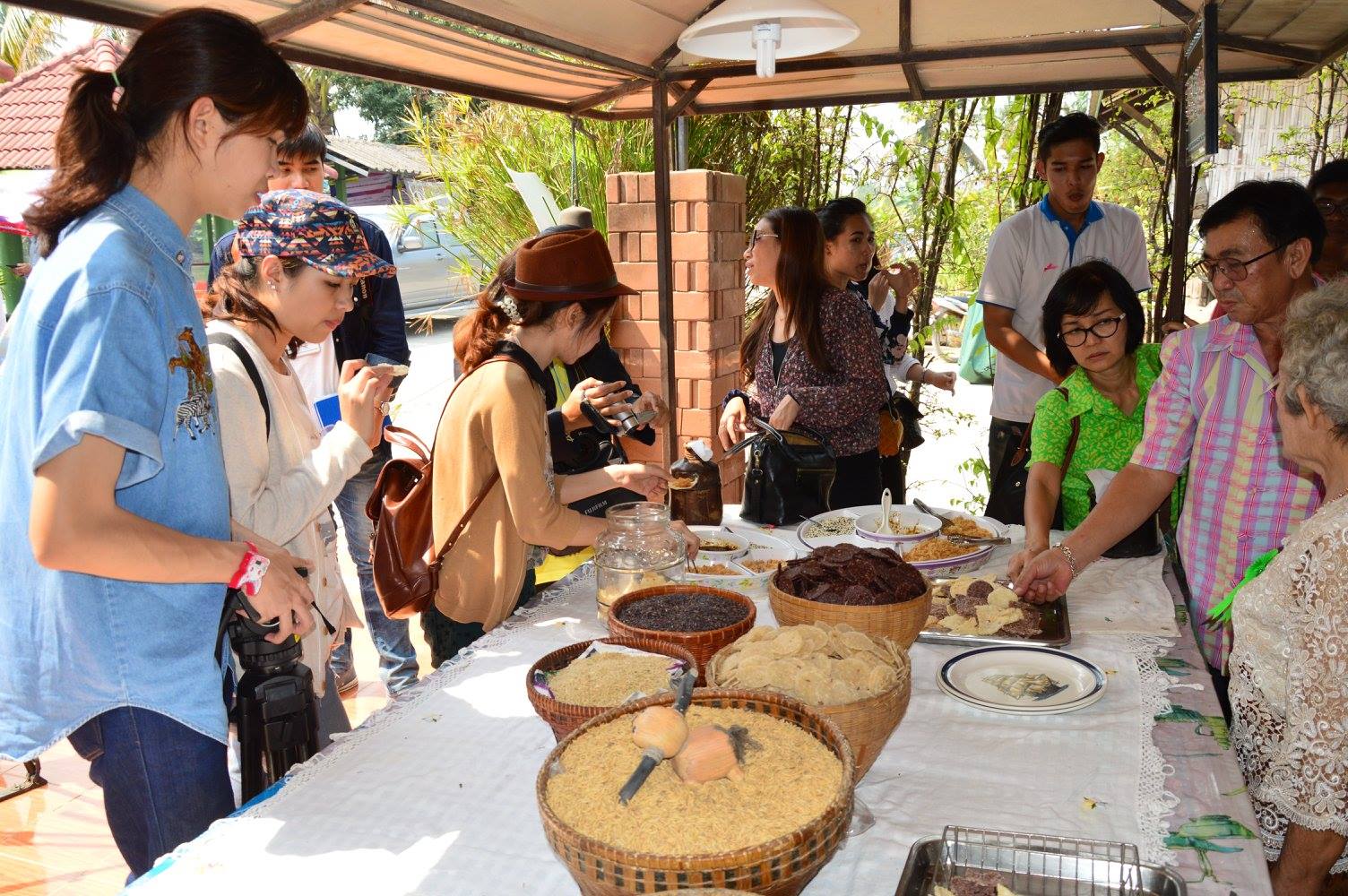
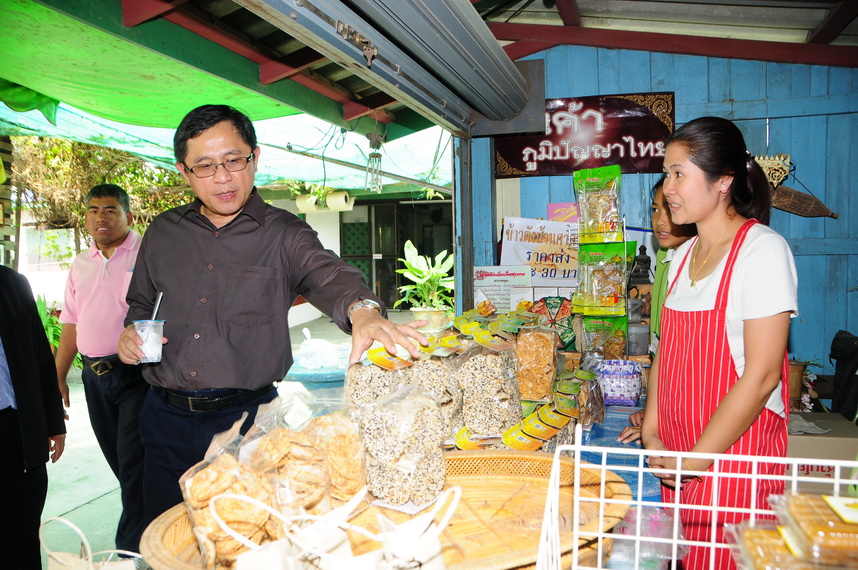
Community enterprise products in the community
assorted rice bowls
- Crispy Golden Banana
- Miang Kham Bua Luang
- Seasonal products such as grapefruit, mango, jackfruit, banana
- Ornamental plants, lotuses and orchids
Source
Thailand Tourism Directory
Recommended
Entrance fees
• Entrance fees: Non-fee
• Remark : -
Review (0)
0
จาก 5.0
Availability
Value
Service
Relate Agritourism
Agricultural Technology Promotion Center for Economic Insects Chiang Mai Province Established in 1980 It is an agency under the Department of Agricultural Extension. Ministry of Agriculture and Cooperatives It plays a major role in research studies. Test and apply economic insect farming technology Promote and transfer economic insect culture technology as a center for development, production, expansion and distribution of economic insect species, as well as providing basic product quality inspection services and diagnosis of diseases and pests of economic insects to farmers and interested parties. It is also a tourist attraction. Agribusiness that is open to both Thai and foreign tourists to get to know and learn about the life of bees and important economic insects of Thailand. Each year, both Thai and foreign tourists visit to study work and travel to the learning points that the center has exhibited, such as learning points on beekeeping, bee breeding, burrow bee, cricket, lac, queen bee, and product processing. and also provide “Honey Shop” product display and distribution point where tourists can watch, taste and buy real, good quality honey and other processed products. of community enterprises and entrepreneurs Tourism program : Learning point/base interesting activities 1. Breeding bees. Open house for breeding bees. (Acquaintance with bees, life cycle and well-being of bees in the hive) Keeping and maintaining bee health checks collecting nectar from flowers and sap. Preliminary analysis of honey quality. 2.Honey bees Wild bees make money. (Get to know the burrowing bees and natural nest building. Traditional poaching beekeeping techniques Modern honey beekeeping Protecting against the pests of honey bees Techniques for collecting good quality honey 3. Chan Rong Open House Chan Rong (Get to know the amazing mini bee, the best pollinator). propagation Nectar, pollen and resin collection behavior of saplings Making resin extracts and their uses 4. Crickets Crickets are the world's reserve protein food source. Commercial cricket species Standard farming techniques and management Processing crickets as food Learning point/base interesting activities 5. Shellac: Get to know lac insects/life cycle and benefits. Transplanting plants for lac culture farming techniques Care and harvest Technology for protection and nursery of lac species during the dry season 6. The queen bee opens the experience of finding the queen bee queen in the hive. birth of queen bee The Great Duties of the Queen Bee Techniques for cultivating queen bees 7. Processed products Watch/Taste/Touch A variety of bee products, natural gifts. The benefits of bee products Tips for buying honey Processing bee products into products for daily use Route links with other attractions: - Chiang Mai Night Safari Night Zoo, distance 750 m. - Royal Park Ratchaphruek, a distance of 1 km. - Wat Inthrawat (Wat Ton Kwen), a distance of 2.5 km. - Wat Phra That Doi Kham, a distance of 4.4 km. - Baan Tawai Handicraft Center, a distance of 10 km. - Wiang Kum Kam, a distance of 11 km.
Chiang Mai
Ruen Phak Kut is the location of the Chang Klang Agricultural Tourism Club to be a coordinating center for agricultural tourist attractions and network of agricultural tourist attractions in the Chang Klang sub-district, there are meeting rooms, rooms and activity grounds.
Nakhon Si Thammarat
The Ministry of Agriculture and Cooperatives established the Golden Jubilee Museum of Agriculture on the occasion of His Majesty King Bhumibol Adulyadej's 50-year to the throne in 1996. On the area of 800,000 square meters in Klong Nueng Subdistrict, Klong Luang District, Pathumthani Province.
Pathum Thani
"...Taste the tea......Chiangda vegetable tea produced in the center. ...see the garden...see the plots to learn about agriculture Flowering plants - ornamental plants, fruit trees - perennial plants, sufficiency economy, vegetable and herb plants, economic insects, check dams, rare plant collection plots, natural check-in points, nature walks, watershed viewing, viewing Local birds...etc. ...invite to shop...agricultural products of the Farmer Network group at the sales point in front of the center. Tourism program : 1 day trip inside the center 2 days 1 night trip..with other nearby attractions Route links to other attractions: '- Ban Tai Lue, Ban Luang Tai Distance before reaching the center 7 km. - Sri Mung Muang Temple Distance before reaching the center 7 km. - Wat Phra That Doi Saket Distance before reaching the center 7 km. - Nong Bua Phra Chao Luang Distance before reaching the center 5 km. Suspension bridge Mae Kuang Udom Thara Distance before reaching the center 10 km. - Doi Saket Hot Spring Distance from the center 9 km. - Huai Hong Krai Royal Development Study Center The distance from the center is about 4 km. - Royal Initiative Project, Agricultural Learning Center, Demonstration Field, 85 Rai The distance from the center is about 7 km."
Chiang Mai
Agricultural Tourism Group, Warin Chamrap District Ubon Ratchathani Province Consists of 6 organic gardens as follows: - Chan Chuen Park is located at 8 Moo 8, Saensuk Subdistrict, Warin Chamrap District, Ubon Ratchathani Province. The uniqueness of the garden is a fish pond with organic farming, such as perfumed coconuts, golden bananas, pandanus, and many other fruits. - Sala Ubon Park (Sala Indo) is located at 162 Moo 10, Kham Kwang Subdistrict, Warin Chamrap District, Ubon Ratchathani Province. The uniqueness of the garden is a blend of organic farming such as Salak, various types of bananas, various papaya species, ornamental plants (Slipper plant and Bauhinia aureifolia). - Baan Ka Suan is located at 235 Moo 10, That Subdistrict, Warin Chamrap District, Ubon Ratchathani Province. The uniqueness of the garden is a blend of organic farming, such as mulberry, figs, stevia, and a variety of vegetable and fruit varieties. The highlight will be products processed from the fruit within the garden. - Niramon Horse Farm is located at 227 Moo 1, Kham Kwang Subdistrict, Warin Chamrap District, Ubon Ratchathani Province. The uniqueness of the garden is that it is a horse farm. There are various breeds of horses with carriages, which are symbols of the past of Warin Chamrap District. There are horse riding courses and organic farming. - Suwankut Lychee Garden is located at 86 Moo 8, That Subdistrict, Warin Chamrap District, Ubon Ratchathani Province. The uniqueness of the garden is a blend of organic fruit orchards such as lychees, dragon fruit, mushroom farms, bananas, mangosteens, jackfruits, durians. - Ratchaphuto Park is located at 59 Moo 10, Saensuk Subdistrict, Warin Chamrap District, Ubon Ratchathani Province. the uniqueness of the garden It will be a blend of organic farming such as papaya, Cavendish bananas, papaya plants, organic vegetables. The highlight will be a place to learn about the underground water bank system. Tour program: 2 days 1 night travel program, price 990/person (30 people) Activities of agro-tourism and organic fruit and vegetable processing Day 1 9:00-11:00 Ratchaphuto Park  Welcome tourists with flower garlands  Take a walk through the mixed agricultural plantation  Learn about the underground water banking system  Brake with garden products  Vegetable cultivation activities You can also bring back the vegetables you planted. 11:30-13:00 Salak Ubon, Salak Indo Garden  Lunch Local food (wild rice)  Take a walk through the orchard / seasonal fruits  Learn how to cut papaya  Grow Salak and get the planted tree back as well 14:00-16:00 Baan Ka Suan  Walk around the orchard to pick fruit and do activities  Brake with garden products  Learn medicinal plants for health  Processing activities mulberry, figs, stevia  Introduce group products and receive garden souvenirs 16:30-18:00 Niramon Horse Farm  Riding a horse carriage from Ban Ka Suan to Niramon Horse Farm  Horseback riding/walking through the mixed agricultural plantation  Learn basic horse riding  Activities with horses horseback riding, horse control, photo shooting with horses,horse bathing, show a clever horse overnight stay Niramon Horse Farm or Suwanakut Lychee Garden 19:00-22:00 Niramon Horse Farm (Growing a tent, cowboy style) or Suwannakot Lychee Garden  Dinner  Rumbaisri, community performance  Recreational activities Day 2 7:00 – 8:30 Niramon Horse Farm or Suwanakut Lychee Garden  Alms giving, listening to the Dharma  Have breakfast 9:00-11:00 Suwanakut Lychee Garden  Walk around the lychee orchard, dragon fruit/seasonal fruits  Brake with garden products  Learn to grow fairy mushrooms  Mushroom farm activity You can also take the mushroom cubes back. 11:30-13:30 Chan Chuen Park  Walk around the garden/seasonal fruit/feed the fish  Learn how to make compost without turning the pile  Tree planting activities You can also bring back the planted plants.  Lunch Route links to other attractions: - Wat Nong Pa Phong (Luang Pucha) 12 kilometers - Farm Hug Por Ubon 15 kilometers - Thung Nong Ya Ma 5 kilometers - Flower garden decorated at Ban Ta Tid 15 km. - Khu Duea Beach 15 kilometers - Travel to nearby communities by bicycles, such as vegetable plots, flower beds, rice farms, Kham Kwang temples, and herbal houses.
Ubon Ratchathani
Chanthaburi Agricultural Extension and Development Center (Chantaburi Bee Center) is an agricultural tourist attraction for economic insect farming; breeding of bee species, burrowing bees, stingless bees, crickets and processing of bee products and stingless bees, learning point of sufficiency economy, cultivation of fairy mushrooms and mushrooms in logs, growing vegetables safe from toxins in containers, Condensed Lemon Cuttings. You can travel every day at Chanthaburi. Beekeeping
Chanthaburi
Little House in the Big Wood is a learning center of sufficiency economy philosophy. It was established by the new generation of agriculturists who would like to inherit sufficient agriculture. By applying a house and garden as the learning center for visitors.
Chumphon
Suan Lamduan hosts a fruit buffet where you can eat unlimited fruits in the garden for 200 baht, including rambutan, durian, mangosteen, longkong, and most importantly, durian. The staffs of this garden provides good service and friendly to all customers.
Rayong
There are no charges for visiting Bhumirak Dhamachart Centerm except if you come in groups and need to participate in the activities that the Center has arranged. Here is an excellent learning source, which provides you understanding of the meaning of the word “sufficient” and how to use resources to gain the most benefits and appreciate its value. The walk around this place is in a circle, starting from the Northern Zone to be excited with the planting of various types of bamboo in both ways as well as the prettiness of the bamboo bridge, the bamboo house near the lotus pond, and the bamboo toys. It is exhibited in this way so that we will know about the many benefits of bamboo, including the making of the water dripping trough for watering the trees and soil to replace people; walking up the small mountains to learn about the wild mountain; hydraulic ram pump is to use water to compress the water to the highland instead of using the water pump, wet fire break system, benefits of vetiver grass, and how to build the check dam. Then, walking though the Central Zone to learn about New Theory Agriculture for the farmers to gain benefits from their own land to its value; learning how to build the soiled house and many types of herbs. After that, walking though the Northeastern Zone to visit the rice bank; learning about the rice milling and how to raise the livestock, in which huge cows can be seen in the stalls; how to make compost for own use so that there is no need to buy chemical fertilizer, and learn about Hom Din, which is how to bring back to good soil for farming by covering the land. But how to do that? It is better to learning by yourself. Lastly, going into the Southern Zone to look at how to burn charcoal from bamboo; how to make Biodiesel, and learn about Kaem Ling Project. Moreover, throughout the Center, I have seen many big and small watercourses along the way. There are pools, agricultural beds to grow crops, Chai Phatthana Hydraulic Turbine, the growing of vetiver in water, and many other things. This is the end of the walk where we have received knowledge and enjoy an untiring walk. Walking around, looking, listening, and asking the officer relentlessly just because things that we think ‘we know’ become things we never knew before. This is because we are used to all these projects or theories but we have never practiced or actually touched. How to travel: From Rangsit intersection, take the direction of Ong Kharak District. Head to use the route of Nakhon Nayok-Nang Rong Waterfall. Pass through Wang Takrai. Before reaching Nang Rong Waterfall for about 2 kilometers, turn right into Khun Dan Prakan Chon Dam Project. Go straight for about 3 kilometers until reaching the traffic circle (with the elephant statues). Go to the right to cross the bridge. When reaching the four-way intersection, turn right and go straight for 200 meters. The Center is on the left-hand side.
Nakhon Nayok
Supattra Land Garden is a collection of 25 types of tropical fruit trees such as durian, mangosteen, rambutan, grape, jackfruit, longan, star fruit, coconut, longkong, salaam, dragon fruit, and rose apple. There are many fruits and also hydroponic vegetables and beekeeping.
Rayong
Winter Flowers Learning Plot - Cymbidium orchid cut flowers - convert tulips Myrrh Learning Plot - Rosemary - Geranium How to grow crops in conservation on the highlands learning plot - Avocado - Arabica coffee - Macadamia Methods for organizing activities - There is a photo spot, parking lot, restroom available. - Take a walk around the learning plots (flower plants, fragrant plants, conservation plants) and learn about propagation and planting/care - There is a point for selling community products, products, vegetables, fruit trees, field crops. - Drinks, coffee, tea, Jiaogulan are available. - There is a house / tent camping service. Participation of tourists - See, taste, shop, community products, bag products, souvenirs, agricultural products, winter fruit trees, field crops, seasonal vegetables - Take a photo, check-in, flower/tulip plots - Take a walk around the learning plot inside the center - Indulge in the atmosphere of the sea of mist in the winter of Chiang Rai. Tour program: 2 days 1 night program Day One 09.30 Depart from Mae Fah Luang International Airport, Chiang Rai, travel to Cherntawan Farm. 10.00 Stop for breakfast at “Phu Thian Resort” / “Jui Kung Pao” 11.00 Cherntawan Rai, study Dharma and the concept of the University of Buddhist Economics (Alternative educational institutions for development according to Buddhist economic philosophy) integrated natural agriculture 12.00 Depart from Cherntawan Farm Stop for a meal at "Lanna Tawanwa" restaurant. 13.00 Watch a demonstration of roasting Assam tea and making Miang, the original model by the farmer community, Mae Loi tea production community. 14.00 Depart from Mae Loi Tea Production Community Enterprise Group To Rai Ruen Ruen, Ngew Subdistrict, Thoeng District 14.30 See the beauty of the organic farm by the new generation, Snack from organic farming plots directly for health, learning and new experiences both principles and actions 15.00 Depart from Rai Ruen Ruen to Doi Pha Mon Center 17.00 Tribal dinner, grilling, activities around the bonfire. along with watching performances from ethnic youth farmers Tribal arts and culture from the community amidst nature and sunset Day Two 04.30 Wake up, do personal tasks 05.00 Travel to the top of Phu Chi Fa Admire the beautiful natural scenery mountains and sea of clouds 06.00 Return to Doi Pha Mon Center 07.00 Have breakfast 08.00 Enjoy the agricultural activities of the center, Doi Pha Mon, see the fragrant plants, tulips, see the beauty of the Cymbidium plots and learn how to grow coffee, avocado and macadamias, taste fresh coffee. High quality from farmers 12.00 Take a break for lunch 13.00 Travel to Ban Phithak Thai Organic Coffee Producers Group. 13.30 Take a walk around the organic coffee plot by the farmers group of Ban Phithak Thai organic coffee producers. Join to study the process of growing good quality organic coffee. Buy souvenirs from ethnic communities 14.30 Travel to Chiang Rai Clock Tower Important landmarks of Chiang Rai 16.00 Buy community products Local food, souvenirs, souvenirs Route links to other attractions: 1) Phu Chi Fa, Tub Tao Subdistrict, Thoeng District, 11 km distance 2) Pha Tang, Po Subdistrict, Wiang Kaen District, a distance of 36 km. 3) Doi Chom Dao, Tub Tao Subdistrict, Thoeng District, distance 6 km.
Chiang Rai
1. It is a learning center for the Garden of Eden, organic agriculture, sufficiency economy. 2. Making biogas for household use 3. Making organic fertilizer and making bio-fermented water 4. Using water buffalo to plow into a traditional way of life 5. Damping and restoring forests for water sources (forest planting) 6. Making pork pits, buffalo pits, chickens, etc. 7. Growing organic vegetables and organic fruits (mixture) 8. Fisheries
Chiang Rai