คำค้นยอดฮิต: ข้าวเหนียวมะม่วง ของขวัญออแกนิค ผลไม้สด
TH | EN
฿ 0.00
Agrotourism Ban Na Ton Chan
Sub district Ban Tuek District Si Satchanalai Province Sukhothai 64130
Image
Image
Image
Image
Weather
Closed
Business hours
• Sunday
: 09:00 - 16:00
• Monday
: 09:00 - 16:00
• Tuesday
: 09:00 - 16:00
• Wednesday
: 09:00 - 16:00
• Thursday
: 09:00 - 16:00
• Friday
: 09:00 - 16:00
• Saturday
: 09:00 - 16:00
Note
: -
Review Score
0
Availability
0
Value
0
Service
0
Read more >
Information
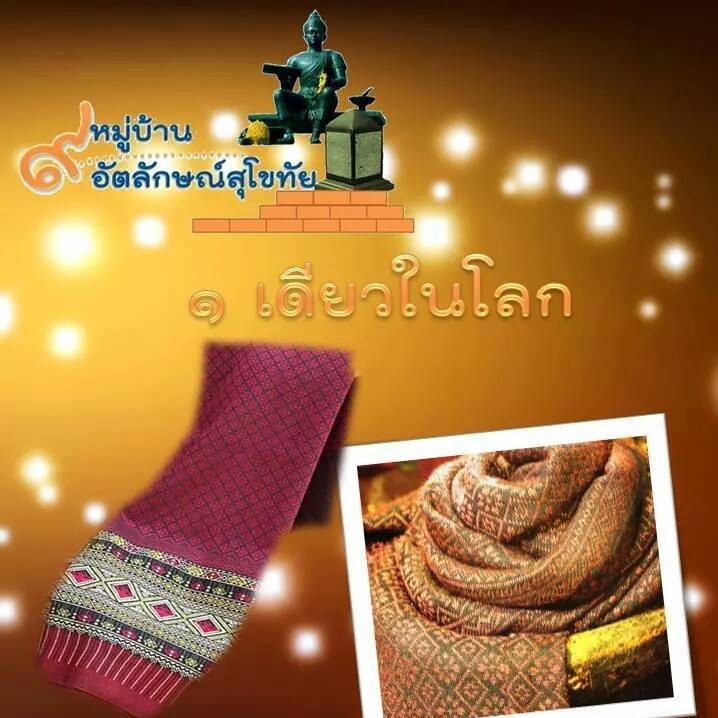
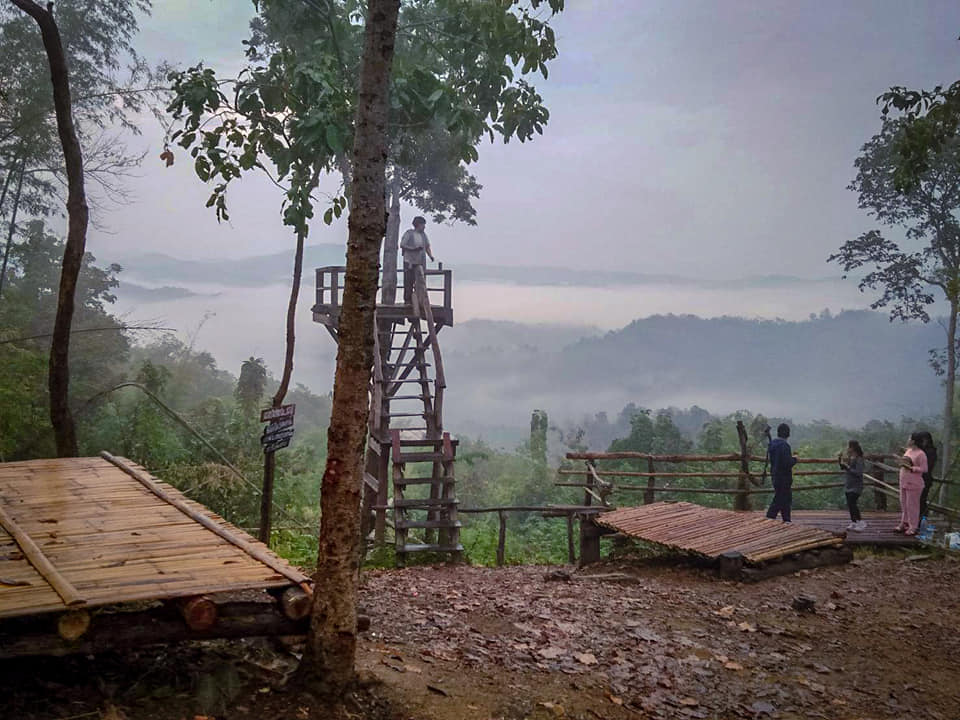
The villagers of Ban Na Ton Chan have a traditional way of life mixed farming. There is mud fermented cloth which made into a good weight fabric. It is beautiful with mud fermentation and intricate weaving. Villagers have adjusted the area for camping. Raise the bamboo litter to make a seat for eating, make a toilet, the rest is still in the same condition as before. This mountain ridge has beautiful scenery. Visitors can watch the sunrise and sunset at the same point.
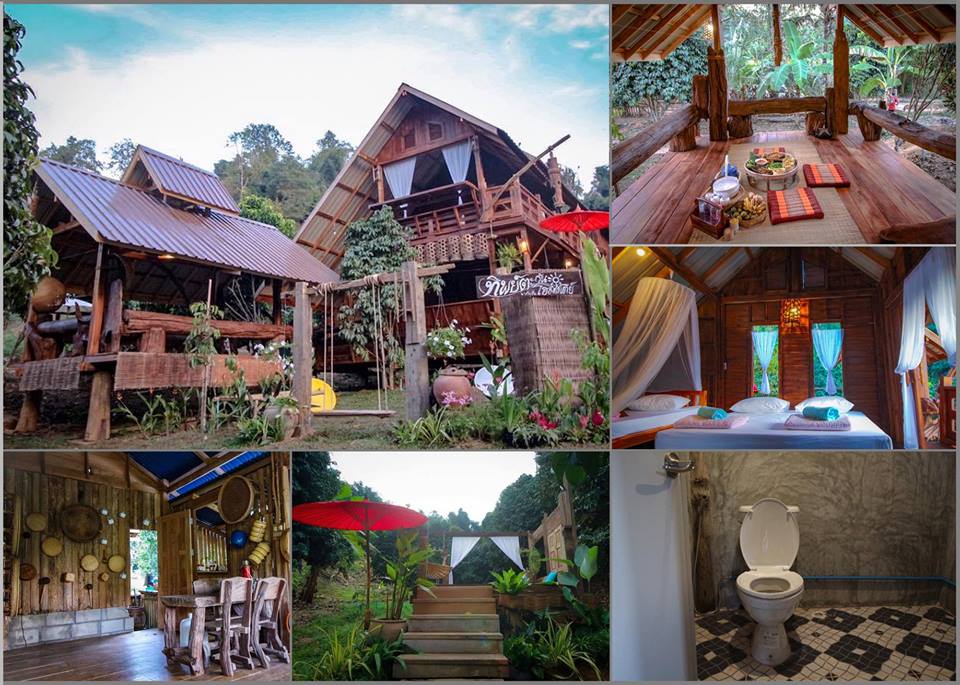
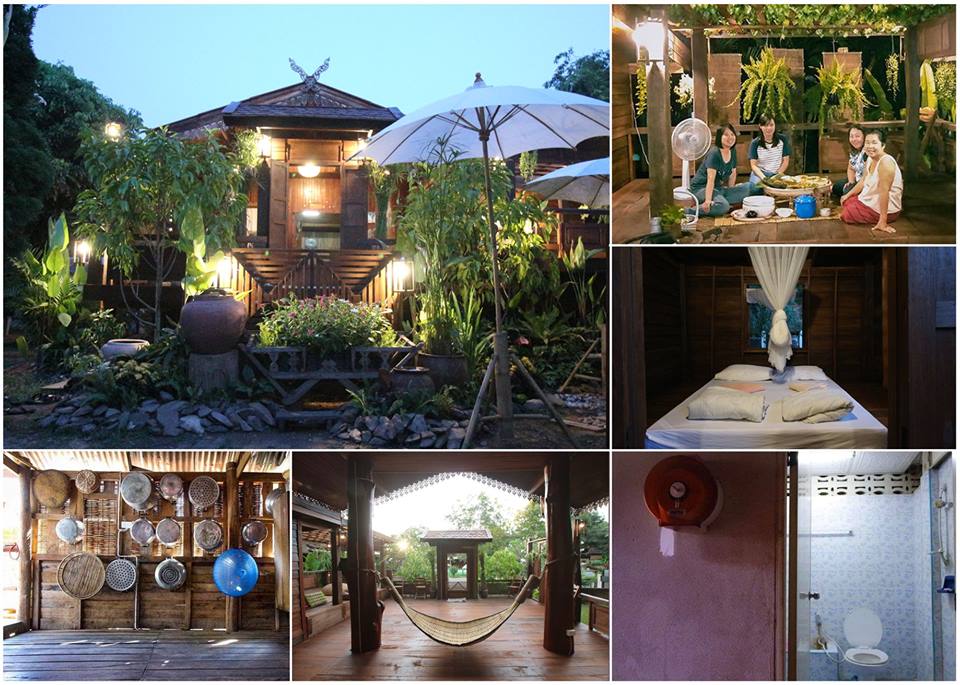
There are about 23 homestays in Ban Na Ton Chan, living separately or in the same house as the owner of the house. Visitors can indulge in the nature around the accommodation with a fully equipped kitchen, they can buy food, cook, and eat comfortably.
There are cycling activities to see the way of life in the village. See orchards and fields with a community guide and visit the fruit orchards of the villagers are some activities.

Tourism program :
- Stay at Baan Na Ton Chan homestay which currently has a total of 23 houses.
- Biking to see the way of life in the village, visiting fruit orchards and fields.
- Watch how to make mud fermented cloth, weaving by hand, Yok Dok cloth, and buying ready-made mud fermented fabrics.
- See how to make a barn doll (Ban Ta Wong)
- See stump handicrafts
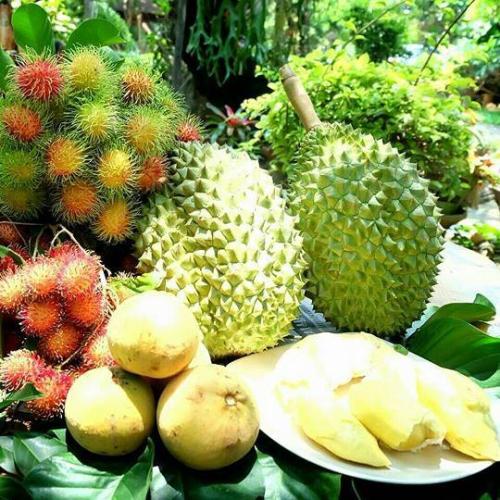
- See and taste seasonal fruits such as durian, rambutan, longkong, mango, maprang, mafai, longan.
- View point "Huai Ton Hai" to watch the sea of ​​mist and the sun
- Watch and test how to cook rice and local food, and sip coffee in a bamboo tube.

Route links with other attractions:
- Si Satchanalai Historical Park Si Satchanalai District, 30 kilometers
- Antique gold shop, antique silver shop 30 kilometers
- Namtok Pa Kha National Park 70 kilometers
- Sukhothai Historical Park (Old Town Sukhothai) 77 kilometers
- Ramkhamhaeng National Park 110 km.
Source
Thailand Tourism Directory
Recommended
Entrance fees
• Entrance fees: Non-fee
• Remark : -
Review (0)
0
จาก 5.0
Availability
Value
Service
Relate Agritourism
Garden No. 1 Sala Hietuk Park: For those who love eating Salak; come here, and you will be delighted with the taste and the friendly nature of the owner of the garden. Sala Hietuk Garden offers a tour of the garden. See the way of life of the villagers and taste fruits. There are fresh fruits for you to buy and take home as well. Activities: Eat fruit (400 Baht/person), visit the garden, Learn about fruit garden and fresh fruits for sale Garden No. 2 Isaree Garden, Thai Horse Farm: it is suitable for family trip, a group of friends, or private trip Activities • Learn organic farming • Horse riding through the orchard • Ride a tram through the orchard • Learn soap making • Hippo therapy • Demonstration of durian processing, tasting durian chewing gum, cake • Eating fruit 400 Baht per person • Accommodation in a homestay Garden 3, Suan Wadi Activities: • Visit the garden • Eat fruit 400 Baht per person • Fresh fruit for sale Garden 4, Arun Burapha Park: this is a place to see the garden, taste the fruits and buy the products to take home. Come out and visit Wat Khao Sukim to see the beauty of Khao Sukim Temple Museum. • Biking around the garden • Learn how to process fruits such as fried durian, durian crackers • Learn how to plant and care for a durian garden • Eat fruit (400 Baht per person) Garden No. 5 Rinradee Park Activities • There are 3 rooms of hotel accommodation with breakfast for 10 persons (1 room for 2 people, 2 rooms for 4 people) • WiFi service • There is a security system with CCTV • There are activities for sightseeing, tasting, all-you-can-eat fruits, rambutan, durian, mangosteen, Langsat • There is a shuttle to take you on an adventure in the orchard. Go to see durian varieties, see Salak trees and take a walk in the orchard. • There is a playground, swings, merry-go-rounds, arched bridges • There are toilets for women, men and people with disabilities • On the viewpoint, you can see Khao Khitchakut, Khao Sukim, Khao Chab, Khao Luk Chang - Come see the windmills that generate electricity • Fruits and vegetables in the garden for sale such as rambutan, durian, mangosteen, Langsat at a cheap price Tour program: Visit the orchard, without eating fruit 50 Baht per person, Visit the orchard, and eat fruit 400 Baht per person Accommodation including breakfast For 2 people, price 990 Baht For 4 people, price 1,990 Baht Those who stay and eat fruit will be charged only 350 Baht per person from 400 Baht Travel calendar: accommodation, garden tour = all year Visit the garden / eat fruit = end of April - end of July or until the fruit runs out Products Crispy Durian Dried Durian Paste Pepper Fresh fruits: rambutan, mangosteen, Langsat, Durian Route links with other attractions (with distance/km) - Wat Khao Sukim, 8 kilometers - Chao Lao Beach, Tha Mai District, 25 kilometers - Krathing Waterfall, Khao Khitchakut District, 20 kilometers - City Pillar Shrine, 20 kilometers - Waterfront Community Market, 20 kilometers - Samet Ngam Shipyard, 25 kilometers - Khao Bai Sri Agricultural Tourism, 15 kilometers Community Enterprise Products - Fresh seasonal fruit - Fried Durian - Dried Durian Paste - Durian Crackers - Pepper - Durian Cake
Chanthaburi
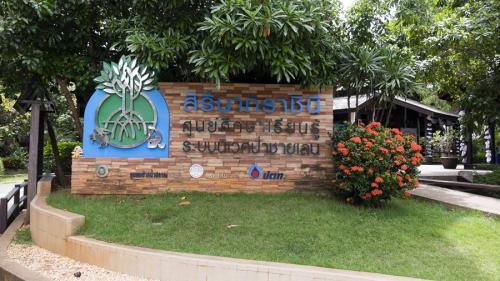
Sirinat Rachinee Mangrove Ecosystem Learning Center is the first mangrove rehabilitation center from abandoned shrimp farms in Thailand. Originally, it was a shrimp farm located in the Pa Khlong Kao National Forest Reserve - Khlong Khoi, Pak Nam Pran Sub-district. Pranburi District Prachuap Khiri Khan. When the King Rama 9 and the Queen came to Pranburi, The Royal Forest Department responded by canceling the shrimp farming concession and then included as part of the Pak Nam Pranburi Forest Development Project. They accelerated the restoration of mangrove forests and designate them as target areas for reforestation and later develop into a mangrove ecosystem learning center.
Prachuap Khiri Khan
King Bhumibol Adulyadej (King Rama IX) foresaw the significance of plant genetic conservation prior to a recognition of the terms “Biological Diversity” and “Conservation” in Thailand. During the trip to Klai Kang Won Palace, A. Hua Hin, Prachuap Khiri Khan Province in 1960, he passed through A. Tha Yang, Phetchaburi Province and noticed many Yang Na trees (Dipterocarpus alatus). Therefore, he had royal words to collect the seeds to plant at Phra Tamnak Piam Suk, Klai Kang Won Palace, and grow the seedlings at Royal Chitralada Projects to study. In 1985, King Rama IX gave a royal word to conserve jackfruit tress around the Grand Palace and initiated the plant conservation project in the palaces by tissue culture. Later in 1986, he had the royal idea to conserve and breed rattan palms and arrange the herbal garden in Royal Chitralada Projects area. Her Royal Highness Princess Maha Chari Sirindhorn carried on the plant conservation project by having the royal idea and asked Lord Chamberlain to carry out plant conservation project in June 1992, when the seed gene bank was formed, and study the preservation of non-industrial crops under the royal thought framework. In 1993, Mr. Sujin Phunikom, the Assistant Subdistrict Headman of Salui and Tha Sae District, Chumporn Province, and his group, cooperated with the Director of Ultra Products Co., Ltd. and the agriculturists in Chumporn Province to establish plant conservation project at the public area located at Moo.6, Salui District (presently Moo. 5 and 6, Salui District, and Moo.4 and 7, Song Phi Nong District). At the same time, the Royal Chitralada Projects was looking for the area to set up the Plant Genetic Conservation Project Under The Royal Initiative of Her Royal Highness Princess Maha Chari Sirindhorn. Subsequently, Royal Chitralada Projects represented by Professor Prachid Wamanont (the Consultant) and the team met with Chumporn Governor (Mr. Prayoon Promphan) to discuss about the project. The first five years, the project was named “Plant Conservation and Development Project Under The Royal Initiative of Her Royal Highness Princess Maha Chari Sirindhorn, Chumporn Province”. Chumporn Provincial Agricultural Extension proposed the project for the approval from Chumporn Governor and submit the project documents to the Director of Royal Chitralada Projects to respectfully inform to Her Royal Highness Princess Maha Chari Sirindhorn on 26 April 1993. Moreover, Plant Conservation and Development Project was integrated with the royal plant genetic conservation project, which Dr. Pisit Wora-urai was a Chairman. The executives meeting on 9 July 1997 had the resolution to change the project’s name from “Plant Conservation and Development Project Under The Royal Initiative of Her Royal Highness Princess Maha Chari Sirindhorn, Chumporn Province” to “Plant Genetic Conservation Project Under The Royal Initiative of Her Royal Highness Princess Maha Chari Sirindhorn”
Chumphon
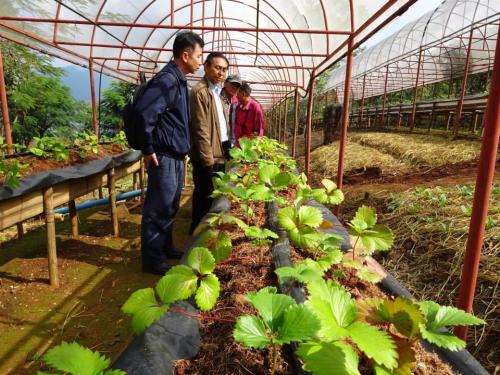
Winter Flowers Learning Plot - Cymbidium orchid cut flowers - convert tulips Myrrh Learning Plot - Rosemary - Geranium How to grow crops in conservation on the highlands learning plot - Avocado - Arabica coffee - Macadamia Methods for organizing activities - There is a photo spot, parking lot, restroom available. - Take a walk around the learning plots (flower plants, fragrant plants, conservation plants) and learn about propagation and planting/care - There is a point for selling community products, products, vegetables, fruit trees, field crops. - Drinks, coffee, tea, Jiaogulan are available. - There is a house / tent camping service. Participation of tourists - See, taste, shop, community products, bag products, souvenirs, agricultural products, winter fruit trees, field crops, seasonal vegetables - Take a photo, check-in, flower/tulip plots - Take a walk around the learning plot inside the center - Indulge in the atmosphere of the sea of mist in the winter of Chiang Rai. Tour program: 2 days 1 night program Day One 09.30 Depart from Mae Fah Luang International Airport, Chiang Rai, travel to Cherntawan Farm. 10.00 Stop for breakfast at “Phu Thian Resort” / “Jui Kung Pao” 11.00 Cherntawan Rai, study Dharma and the concept of the University of Buddhist Economics (Alternative educational institutions for development according to Buddhist economic philosophy) integrated natural agriculture 12.00 Depart from Cherntawan Farm Stop for a meal at "Lanna Tawanwa" restaurant. 13.00 Watch a demonstration of roasting Assam tea and making Miang, the original model by the farmer community, Mae Loi tea production community. 14.00 Depart from Mae Loi Tea Production Community Enterprise Group To Rai Ruen Ruen, Ngew Subdistrict, Thoeng District 14.30 See the beauty of the organic farm by the new generation, Snack from organic farming plots directly for health, learning and new experiences both principles and actions 15.00 Depart from Rai Ruen Ruen to Doi Pha Mon Center 17.00 Tribal dinner, grilling, activities around the bonfire. along with watching performances from ethnic youth farmers Tribal arts and culture from the community amidst nature and sunset Day Two 04.30 Wake up, do personal tasks 05.00 Travel to the top of Phu Chi Fa Admire the beautiful natural scenery mountains and sea of clouds 06.00 Return to Doi Pha Mon Center 07.00 Have breakfast 08.00 Enjoy the agricultural activities of the center, Doi Pha Mon, see the fragrant plants, tulips, see the beauty of the Cymbidium plots and learn how to grow coffee, avocado and macadamias, taste fresh coffee. High quality from farmers 12.00 Take a break for lunch 13.00 Travel to Ban Phithak Thai Organic Coffee Producers Group. 13.30 Take a walk around the organic coffee plot by the farmers group of Ban Phithak Thai organic coffee producers. Join to study the process of growing good quality organic coffee. Buy souvenirs from ethnic communities 14.30 Travel to Chiang Rai Clock Tower Important landmarks of Chiang Rai 16.00 Buy community products Local food, souvenirs, souvenirs Route links to other attractions: 1) Phu Chi Fa, Tub Tao Subdistrict, Thoeng District, 11 km distance 2) Pha Tang, Po Subdistrict, Wiang Kaen District, a distance of 36 km. 3) Doi Chom Dao, Tub Tao Subdistrict, Thoeng District, distance 6 km.
Chiang Rai
The garden is adjacent to the irrigation canal which cause a cool wind blowing all the time. Inside the garden is shady. There are kiosks for tourists to sit, relax and eat the fruits from the garden. The highlight of Pu Yai Somkuan Garden is the gigantic 100 years old mangosteen tree with tall trunk and beautiful bush. The distinctive feature of the 100 years old mangosteen is that it has a thinner shell, more delicious than normal mangosteen; but smaller in size.
Rayong
Ban Santitham is located on the area of 16,000 square meters with more than 700 kind of healing herbs spread over the area. There is also a Thai wooden house which is used to exhibit a variety of ancient agricultural tools, and there is a barn, rice threshing and rice milling equipment display behind the house. In addition, a part of the house is reserved for youth camp with the space for recreation activities.
Chachoengsao
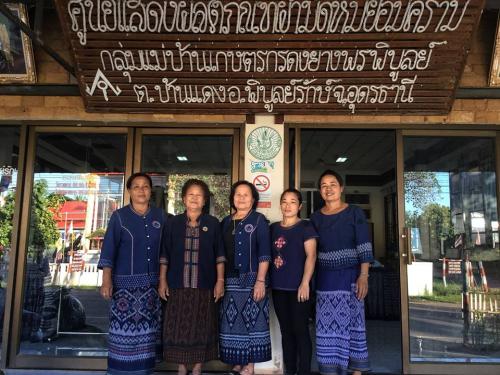
Natural color is used to dye the Mudmee. It is the OTOP product selling at Bann Na Kha, Bangkok, and bann Chiang. The group weaves the textile from the customer’s order so it generate income to people in Bann Daeng District.
Udon Thani
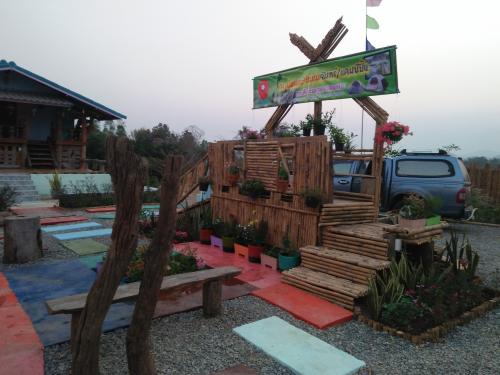
Non-toxic agricultural crops camping service. You can ride a bicycle and see the beautiful surrounding scenery.
Phayao
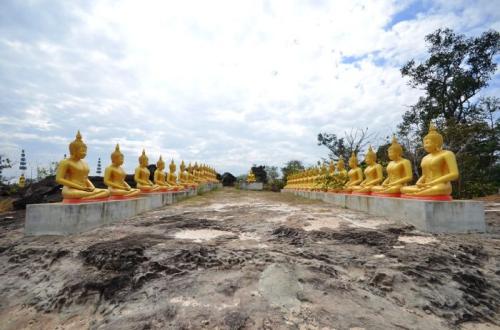
Phu Tham Phra is a large cave, about 3 wa wide, about 8 wa long, located on the southern slope of the mountain. There is an entrance along the rock niche which is majestically located around a tunnel; from the mouth of the cave to the north can walk comfortably. Tham Phra Buddha Cave has 2 levels of nature as a place to be enshrined of Buddha statues, which are lined up in rows and there are 2 reclining Buddha images, Phra Kajjana Buddha images, built during the reign of Ajarn Dee Chano in this beautiful cave Phu Tham Phra is a small mountainous area. The area is about 200 rai, with mixed deciduous forests that are generally quite complete, providing shady, cool weather. It is the watershed source of many creeks. The stone pillar looks like a tourist attraction of Phu Pha Thoep. And there is a viewpoint as a beautiful natural source near the ascent, there will be a brick arch to be "Phu Ngo", the locals call Khong Gate which is located in the north of Phu Tham Phra, about 1 kilometer away. Currently, only ruins remain. The sanctity of Phu Tham Phra that has been passed down from generation to generation is that if villagers in that area go out to find forest products; they must come to this cave to worship. Then there will be luck in making a living and escape from all dangers.
Yasothon
Various kinds of fruit orchards, cool and charming atmosphere, along with accommodation and food
Kamphaeng Phet
The plot collects more than 100 types of fragrant plants and herbs from the northeastern region.
Nong Khai
Dong Muang Toei is the old city of the Khmer period. No one knows when it has been an abandoned city for how long. The condition seen from many generations of great-grandparents; Dong Muang Toei has high forests with transparent in the bottom ground. There were some small trees and the big trees are rubber trees, tabaek trees, and Yang Hiang trees. It is a very dense forest. The parents and grandparents did not dare to cut down the trees in this grove because Dong Muang Toei has a fierce ghost called the Ghost of Grandfather. The forest is the habitat of monkeys and many birds. The marsh around Dong Muang Toei is a deep swamp with water all year round. It is a habitat and a natural breeding ground for fish. In addition to birds and this swamp is known to have the most turtles. The reason there are so many turtles, the villagers worship the spirits of their grandfathers. Grandfather forbids anyone to eat and destroy his animals, monkeys and turtles, and if they cause harm, they shall be punished accordingly. Later, about 90 years ago, Song Puei villagers had a shaman who studied sorcery to perform a ceremony to defeat the ghosts of Muang Toei. This sorcerer's name is Elder Suwo. This incident coincides with the reign of Father Yai Agrahad. It was the eyes of the light when villagers near and far heard the news that Father Yai Suwo had defeated the Phi Dong Muang Toei. They flocked to catch fish turtles from Muang Toei for food until they almost cleared the swamp. So turtles are almost extinct until now. Father Yai Suwo has shared the swamp as a land for brothers and sisters to cultivate until today. As for Dong Muang Toei, the area has been divided into farming, gardening, and growing crops as much as today. This is true Elderly people who have reached 90 years of age, such as Father Yai, light scent, Father Big Bu Kokpuei, are still alive as witnesses.
Yasothon