คำค้นยอดฮิต: ข้าวเหนียวมะม่วง ของขวัญออแกนิค ผลไม้สด
TH | EN
฿ 0.00
Agricultural Learning Center Sakhu Subdistrict Administrative Organization
Sub district Sakhu District Thalang Province Phuket
Image
Image
Image
Image
Weather
Closed
Business hours
• Sunday
: 09:00 - 16:00
• Monday
: 09:00 - 16:00
• Tuesday
: 09:00 - 16:00
• Wednesday
: 09:00 - 16:00
• Thursday
: 09:00 - 16:00
• Friday
: 09:00 - 16:00
• Saturday
: 09:00 - 16:00
Note
: -
Review Score
0
Availability
0
Value
0
Service
0
Read more >
Information
Promoting and supporting agricultural occupations of Sakhu sub-district
Source
Thailand Tourism Directory
Recommended
Entrance fees
• Entrance fees: Non-fee
• Remark : -
Review (0)
0
จาก 5.0
Availability
Value
Service
Relate Agritourism
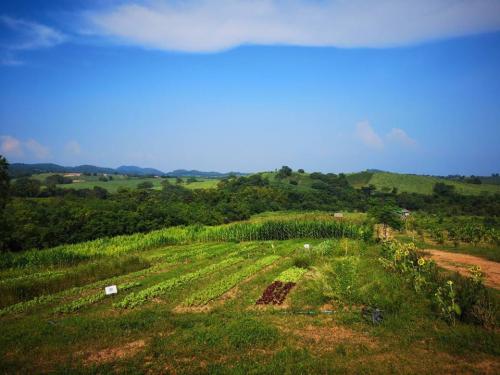
Sufficiency Economy Philosophy House is a learning center of the new agriculture theory. Inside the integrated garden, is planting vegetables for household consumption adhering to the sufficiency economy philosophy of King Rama IX. It is also the pilot model of growing rice berry in the 400 plastic tanks that results in the 20 tanks of paddy, which is sufficient for consumption all year round. Later, numbers of villagers and foreigners visit this place. The lecturer is available to provide knowledge about the SEP to the students and interested people.
Chumphon
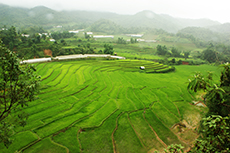
Rice terraces, Pid Thong Lang Phra Project is located in Chaloem Phrakiat District. It is a project under the royal initiative. Nan province is a pilot province to carry on the royal initiatives of His Majesty the King. Her Majesty Her Majesty the Queen The project's approach is to start with reducing the use of forest areas. Seeking new methods of growing rice by adopting terraced farming methods on mountain areas instead of paddy rice in order to solve poverty problems sustainably By focusing on the villagers to think for themselves But the government will go in to educate and find a suitable model for solving the problem of coexistence between people and forests in Thailand. upstream forest area Projects here are not only digging terraced rice fields, but also constructing water storage ponds, weirs, and soybean planting. including animal husbandry
Nan
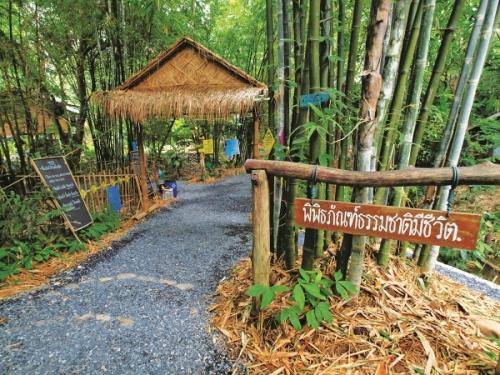
There are no charges for visiting Bhumirak Dhamachart Centerm except if you come in groups and need to participate in the activities that the Center has arranged. Here is an excellent learning source, which provides you understanding of the meaning of the word “sufficient” and how to use resources to gain the most benefits and appreciate its value. The walk around this place is in a circle, starting from the Northern Zone to be excited with the planting of various types of bamboo in both ways as well as the prettiness of the bamboo bridge, the bamboo house near the lotus pond, and the bamboo toys. It is exhibited in this way so that we will know about the many benefits of bamboo, including the making of the water dripping trough for watering the trees and soil to replace people; walking up the small mountains to learn about the wild mountain; hydraulic ram pump is to use water to compress the water to the highland instead of using the water pump, wet fire break system, benefits of vetiver grass, and how to build the check dam. Then, walking though the Central Zone to learn about New Theory Agriculture for the farmers to gain benefits from their own land to its value; learning how to build the soiled house and many types of herbs. After that, walking though the Northeastern Zone to visit the rice bank; learning about the rice milling and how to raise the livestock, in which huge cows can be seen in the stalls; how to make compost for own use so that there is no need to buy chemical fertilizer, and learn about Hom Din, which is how to bring back to good soil for farming by covering the land. But how to do that? It is better to learning by yourself. Lastly, going into the Southern Zone to look at how to burn charcoal from bamboo; how to make Biodiesel, and learn about Kaem Ling Project. Moreover, throughout the Center, I have seen many big and small watercourses along the way. There are pools, agricultural beds to grow crops, Chai Phatthana Hydraulic Turbine, the growing of vetiver in water, and many other things. This is the end of the walk where we have received knowledge and enjoy an untiring walk. Walking around, looking, listening, and asking the officer relentlessly just because things that we think ‘we know’ become things we never knew before. This is because we are used to all these projects or theories but we have never practiced or actually touched. How to travel: From Rangsit intersection, take the direction of Ong Kharak District. Head to use the route of Nakhon Nayok-Nang Rong Waterfall. Pass through Wang Takrai. Before reaching Nang Rong Waterfall for about 2 kilometers, turn right into Khun Dan Prakan Chon Dam Project. Go straight for about 3 kilometers until reaching the traffic circle (with the elephant statues). Go to the right to cross the bridge. When reaching the four-way intersection, turn right and go straight for 200 meters. The Center is on the left-hand side.
Nakhon Nayok
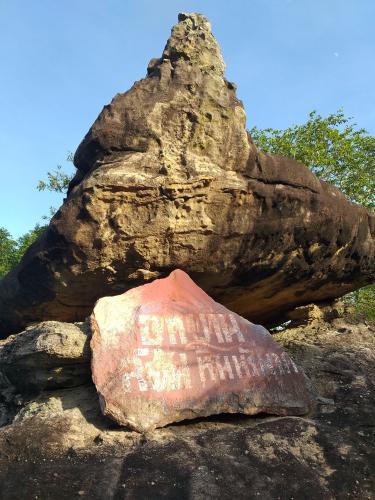
Phu Kaset is a high mountain with a wide stone terrace, and turn into Tad Hang Waterfall in the rainy season There are many different shapes of rocks that arose naturally, and it has a steep cliff; it is the location of Wat Phu Kaset (Dan Hin Hua Nak).
Amnat Charoen
Baan Bua Thoeng Community, the learning center for sufficient living, mixed farming, organic agriculture, bio-composting resources, the benefits and use of bio-compost to agriculture, and the use of local wisdom in agricultural development to suit hot and dry climate of Northeast.
Ubon Ratchathani
Khao Yai Farm Village is an agricultural tourist attraction. There are sheep and rabbit farms, a learning center, and a comprehensive tourism tour. There are also more than 20 activities such as mushroom picking, egg picking, terrarium gardening, clay oven pizza making, herbal candles making, clay pottery making, soap making, etc. It opens every day, and entrance fee is 100 baht. Green Me Organic Farm: The uniqueness lies in the way of organic farming. There are rice cultivation, animal husbandry, vegetable cultivation, mushroom cultivation and quality product processing. And there are accommodations for tourists who want to learn organic farming methods. Visitors should contact in advance. Pakchong Vegetable Garden is outstanding for the sufficiency farming method. It is divided into learning bases for visitors to study and visit and Mr. Noom Sek, the owner of the garden who was selected as an outstanding farmer They can also transfer knowledge and experience in agricultural management as well. Guno Garden is a source of high quality original organic salads. There are vegetable planting demonstrations and vegetable planting activities for children as a group and also teaches how to make vegetable salads, salad rolls as well Khao Yai Floating Market: there are more than 200 kinds of plants and flowers to see and study. And there is also a hand-roasted coffee activity for tourists to participate in the activity. Open every day, entrance fee is 100 baht. There are many vineyards among Pak Chong agro-tourism community enterprises such as Suan Kwan Si, Suan Chaiyapruek, Khun Wan Vineyard, Suan Phomchon, Alsidini Wine Vineyard, etc. Pak Chong Durian Orchard: a kind that must be reserved in advance only with the distinctive taste of Pak Chong fruit makes tourists must travel to taste the garden Zeta Durian Orchard, Rai Wong Kaset 2 orchards in our group that produce quality Pak Chong durians. Ken Pha Phong Farm: Organic Strawberry Farm Open for tourists to collect themselves; and more importantly, it is delicious and safe Suan Lung Chob, a large garden on an area of more than 1200 rai, grows bananas, mangoes, dragon fruit, with export quality, suitable for group study trips. Rai Wanakun, a collection of rare plants from all over the country Tourists that they visit should be booked in advance. Uncle Somnuk Anthurium Garden Anthurium flower garden and potted moss and cut flowers. Visitors who visit or see the event should attend in advance. WB Organic Farm The organic farm has a large compost plant. grow vegetables wholesale Organic Thailand Standard Suitable for study groups to visit as a group Tour program: Pink Route Suan Kwan Sri Suan Chaiyapruek Suan Anthurium Lung Somnuk Blue Route Khao Yai Farm Village Green Mee Pak Chong Vegetables Khao Yai Floating Market Alsidini Wine Vineyard Green Route Kenphapong Farm, Uncle Chob Garden, Khun Wan Vineyard Route links to other attractions: Khao Yai National Park, a distance of about 50 kilometers Pak Chong Night Market 20-30 kilometers
Nakhon Ratchasima
King Bhumibol Adulyadej (King Rama IX) foresaw the significance of plant genetic conservation prior to a recognition of the terms “Biological Diversity” and “Conservation” in Thailand. During the trip to Klai Kang Won Palace, A. Hua Hin, Prachuap Khiri Khan Province in 1960, he passed through A. Tha Yang, Phetchaburi Province and noticed many Yang Na trees (Dipterocarpus alatus). Therefore, he had royal words to collect the seeds to plant at Phra Tamnak Piam Suk, Klai Kang Won Palace, and grow the seedlings at Royal Chitralada Projects to study. In 1985, King Rama IX gave a royal word to conserve jackfruit tress around the Grand Palace and initiated the plant conservation project in the palaces by tissue culture. Later in 1986, he had the royal idea to conserve and breed rattan palms and arrange the herbal garden in Royal Chitralada Projects area. Her Royal Highness Princess Maha Chari Sirindhorn carried on the plant conservation project by having the royal idea and asked Lord Chamberlain to carry out plant conservation project in June 1992, when the seed gene bank was formed, and study the preservation of non-industrial crops under the royal thought framework. In 1993, Mr. Sujin Phunikom, the Assistant Subdistrict Headman of Salui and Tha Sae District, Chumporn Province, and his group, cooperated with the Director of Ultra Products Co., Ltd. and the agriculturists in Chumporn Province to establish plant conservation project at the public area located at Moo.6, Salui District (presently Moo. 5 and 6, Salui District, and Moo.4 and 7, Song Phi Nong District). At the same time, the Royal Chitralada Projects was looking for the area to set up the Plant Genetic Conservation Project Under The Royal Initiative of Her Royal Highness Princess Maha Chari Sirindhorn. Subsequently, Royal Chitralada Projects represented by Professor Prachid Wamanont (the Consultant) and the team met with Chumporn Governor (Mr. Prayoon Promphan) to discuss about the project. The first five years, the project was named “Plant Conservation and Development Project Under The Royal Initiative of Her Royal Highness Princess Maha Chari Sirindhorn, Chumporn Province”. Chumporn Provincial Agricultural Extension proposed the project for the approval from Chumporn Governor and submit the project documents to the Director of Royal Chitralada Projects to respectfully inform to Her Royal Highness Princess Maha Chari Sirindhorn on 26 April 1993. Moreover, Plant Conservation and Development Project was integrated with the royal plant genetic conservation project, which Dr. Pisit Wora-urai was a Chairman. The executives meeting on 9 July 1997 had the resolution to change the project’s name from “Plant Conservation and Development Project Under The Royal Initiative of Her Royal Highness Princess Maha Chari Sirindhorn, Chumporn Province” to “Plant Genetic Conservation Project Under The Royal Initiative of Her Royal Highness Princess Maha Chari Sirindhorn”
Chumphon
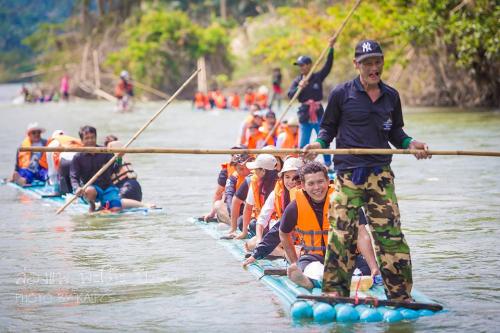
Community Enterprise, Fruits Quality Promotion Group Phato Sub-district, Phato District, Chumporn Province operates agrotourism by networking with the tourism groups in Phato District. Activities available here are rafting, garden touring, fruit tasting, trekking, and visiting a waterfall. Besides, traditional food tasting, such as orange curry with banana stalk and pork belly, stir-fried Liang leaves with egg, rice in bamboo, and traditional coffee tasting.
Chumphon
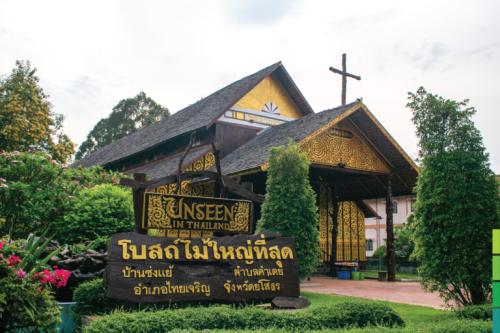
Ban Song Yae Christian Church is located in Thai Charoen district, Yasothon. There is a history in 1908 that there were 5 families who fled from different places to live in this area, they fled for the same reason, which was accused being ghouls and they were therefore attacked and drove away. It is the 4th church, planned for construction in 1936. Villagers gathered wood and built it in 1947. The shape of the church was built in Thai art style, width 16 meters, length 57 meters. It is the largest in Thailand, using 80,000 wooden planks as roofing boards, using 360 columns of different sizes, mostly wooden poles. The pillars in the middle row are the largest and longest with 260 trees, more than 10 meters high from the ground. The floor planks are of red wood and large Takhian wood. The wooden bench can hold over a thousand people. The church bell has a diameter of almost 2 feet in a tall bell tower built in the style of a bell tower in typical Thai temples. But strange that it is separate from the church and because the wood that has been gathered is a lot Therefore, the remaining wood was used to build Ban Song Yae Pittaya School.
Yasothon
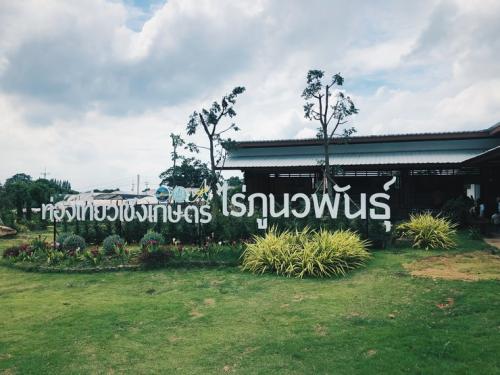
Phu Nawaphan Vineyard It is a vineyard with processed products of grapes, grapes, grape juice, etc.
Saraburi
It is an agritourism attraction that is still natural and pure. It is also warm with the beautiful way of life of the hill tribes. During September to October is the rice farming season which is suitable period to visit.
Mae Hong Son